
Racing Rush 3D: Car Game
TunergyRacing
0.00.00 Reviews
- Version
- 0.1.4
- Installs
- 500.00K
- Age Rating
- Everyone
Screenshots
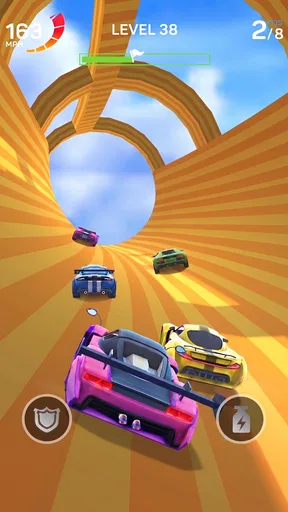
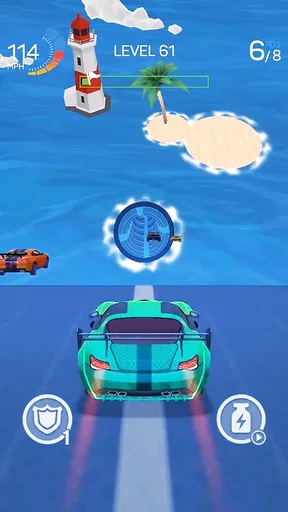
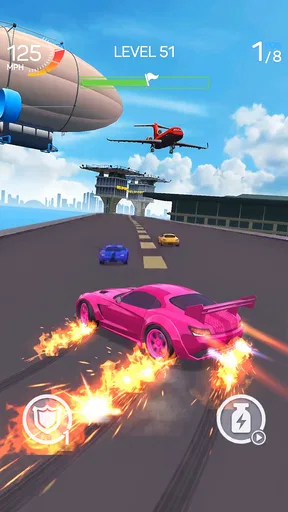
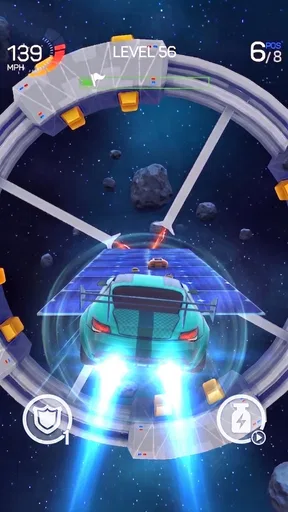
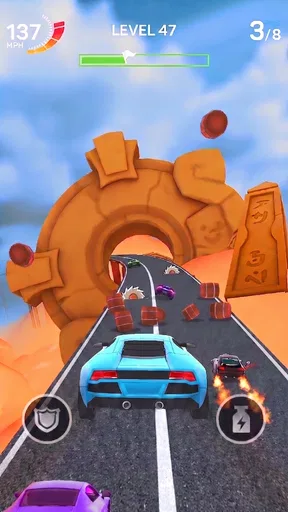
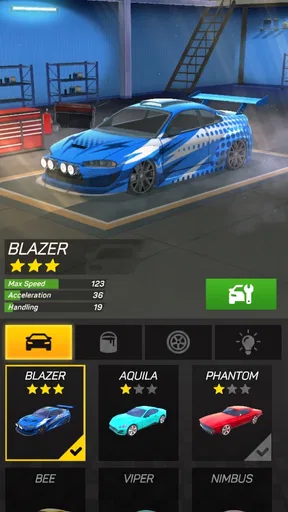
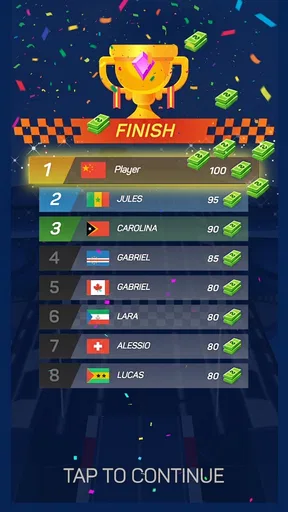
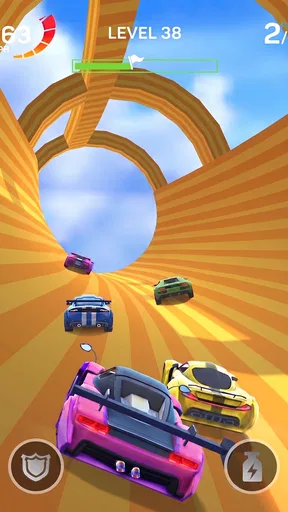
Our Review of Racing Rush 3D: Car Game
 Analysis by Appyee
I went into Racing Rush 3D: Car Game expecting a quick arcade racer, and that is exactly the role it fills best: short bursts of driving where the immediate goal is to stay alive, avoid traffic, and keep the car moving at speed. It comes from Tunergy and sits in the racing category, with a free download and optional purchases ranging from $1.99 to $9.99 per item. The basic appeal is easy to understand, but the game is more enjoyable when approached as a pick-up-and-play experience rather than as a full driving simulator.
My first impression was that the game is built around reaction rather than long-term planning. You are not entering a detailed motorsport career or tuning a vehicle for realistic track conditions. Instead, the road becomes a stream of decisions: which gap is safe, when to change direction, and whether a drift is worth the risk. That simplicity makes it approachable, although it also means that players looking for deep progression or highly technical racing may quickly want something more substantial.
How the current version feels in everyday play
The current release is version 0.1.4, so I see it as an early-stage racing game rather than a finished, feature-heavy rival to established franchises. That matters when deciding what to expect. The core loop can be appealing because it gets to the action quickly, but a young version also makes the experience feel like something that may still be taking shape. I would recommend trying it with that mindset instead of assuming it already offers the breadth of a mature racing series.
The most natural use case is a short break. If I have a few minutes before leaving home, while waiting for a friend, or during a commute when I am not driving, this type of game works because it does not demand a long session to make sense. I can start a run, focus on the road, and stop without needing to remember a complicated campaign. That convenience is one of its clearest strengths.
The traffic changes the feel considerably. A normal lap-based racer gives me a fixed course and lets me learn braking points. Here, the important skill is reading moving obstacles and preserving a safe line. I find it useful to look beyond the nearest vehicle instead of reacting only when a car is already in front of me. Watching the next opening early gives me more time to choose a lane and prevents the frantic last-second swerves that usually end a run.
Drifting adds another layer, but I would not treat it as something to use constantly. A drift can help redirect the car or carry momentum through a bend, yet initiating one at the wrong moment can put me directly into traffic. My practical advice is to use drifting as a controlled correction, not as a permanent driving style. Players who focus only on speed may discover that a slightly slower, cleaner line produces a better result than repeated risky slides.
What the early version does well
The strongest quality is accessibility. The premise is immediately readable, and the game does not require racing knowledge before the first attempt. Someone who rarely plays driving games can understand the objective through the road itself: keep moving, avoid collisions, and use the available space intelligently. That makes it a reasonable choice for casual players, younger users, and anyone who prefers arcade action over simulation.
The Everyone content rating also fits the broad, uncomplicated presentation. I would still supervise a child’s spending if the device is shared, because free games with optional purchases can be easy to use without understanding the cost. The rating describes the intended audience, but it does not replace sensible purchase controls on a family device.
I also like that the traffic creates a different kind of concentration from ordinary circuit racing. In a traditional racer, memorizing a track can eventually make each lap predictable. In this style of game, the challenge comes from adjusting to what is immediately ahead. That gives repeat attempts a practical purpose: I am not simply trying to remember a route; I am trying to improve my judgment about spacing, timing, and risk.
One useful habit is to treat the edge of the road as a temporary escape route rather than a default lane. Staying near one side may appear safer because it reduces the number of directions from which traffic can approach, but it can also remove my options when an obstacle appears. Keeping a little room to move is often more valuable than hugging the boundary. This is the kind of small adjustment that makes the game feel less random and more skill-based.
Where it differs from familiar racing alternatives
Compared with a realistic driving simulator, this game is much easier to pick up and much less concerned with authentic vehicle behavior. That is good news if I want immediate action, but not if I am looking for manual control, detailed car setup, or a convincing recreation of road driving. A simulator rewards patience and precision over time; this game is better suited to quick reactions and repeated attempts.
Compared with a conventional track racer, the focus is also different. Track games usually give me a clear route, opponents to pass, and a finish line that structures the session. Racing Rush 3D places more attention on surviving traffic and managing the next few seconds. I would choose the track-based alternative when I want competition with a defined beginning and end. I would choose this one when I want an endless-feeling test of awareness without committing to a full race weekend.
Endless runners are another useful comparison. They often emphasize collecting items and changing lanes at a steady rhythm, while this game’s identity comes from the car and the possibility of drifting. If I want a driving-specific feel rather than a general obstacle-avoidance game, this is the more suitable option. On the other hand, someone who prefers a very simple one-touch experience may find a runner more comfortable.
The free-to-play structure is also worth considering beside paid racing games. There is no purchase price to begin, which lowers the barrier for experimenting. The trade-off is that optional items can influence how a player thinks about progress and spending. I would start without buying anything, learn whether the basic driving loop holds my attention, and only then decide whether an optional item genuinely improves my experience. That approach avoids paying for a game I may stop playing after a few short sessions.
How the release stage affects returning players
For someone already playing an earlier build, the move to version 0.1.4 should be viewed as part of the game’s ongoing development rather than proof of a major transformation. I would pay attention to how the driving feels after updating: whether controls remain familiar, whether traffic feels fair, and whether the overall pace still suits the way I used to play. Those are more meaningful checks than simply seeing a new version label.
New players have a simpler decision. They can judge the current experience on its own terms without comparing it with a previous build. Existing users, however, may notice small changes in balance or handling as the developer continues shaping the product. If a favorite technique suddenly feels less reliable, I would first adapt my timing and test several runs before assuming the change is permanent. Early versions can evolve, and a habit that worked in one build may not remain optimal.
The game’s audience size suggests that it has already attracted more than 500,000 installs, which is encouraging for anyone who wants to join an active casual racing audience. I would not treat that figure as a guarantee of long-term content or support, though. Installs tell me that people have tried it; they do not tell me whether the game will match my preferred depth, controls, or progression style.
For returning players, the best way to evaluate an update is to compare specific routines rather than relying on memory. Try a few runs using the same conservative approach, then a few with more aggressive drifting. Notice whether the car responds predictably and whether traffic gives enough time to react. This method separates a genuine handling difference from the normal variation that comes with a fast arcade game.
Practical advice for getting more from each run
I recommend beginning with observation instead of chasing maximum speed immediately. During the first attempts, I focus on identifying how quickly traffic closes gaps and how much space the car needs to change direction. Once that rhythm becomes familiar, I start using drift more deliberately. This two-step approach is less exciting than driving recklessly, but it gives me a much clearer sense of what caused a failed run.
Another helpful technique is to choose the next safe opening before reaching the current obstacle. If I wait until the front car is almost alongside me, I have already surrendered most of my options. Looking one or two vehicles ahead lets me decide whether to move early, stay put, or prepare for a drift. This is especially useful when several cars appear close together, because the first gap may be a trap while the following one is safer.
I also avoid changing direction repeatedly without a reason. Fast left-right corrections can feel active, but they make it harder to maintain a predictable line. A single committed move is usually easier to control than a sequence of nervous adjustments. When I make a mistake, I try to identify whether I misjudged distance, entered a drift too late, or moved toward a closing gap. That turns each failed attempt into a specific lesson rather than a vague feeling that the game was unfair.
For a child or a new player, I would suggest short sessions with a simple goal such as surviving longer or completing a run without unnecessary drifting. That creates a manageable learning curve. For an experienced arcade racer, the challenge is more likely to come from self-imposed goals: taking fewer risks, maintaining a cleaner line, or seeing how consistently a particular approach works. The game benefits from these personal targets because its straightforward structure may not provide enough depth on its own.
Limitations I would consider before installing
The main limitation is scope. The game’s appeal rests heavily on its immediate driving loop, so players who need a large garage, deep customization, structured championships, or a strong narrative should look elsewhere. I would not install it expecting a replacement for a premium racing title. Its value depends on whether quick traffic-dodging sessions are enough to keep me interested.
The early version is another consideration. Version 0.1.4 communicates that the product is still relatively young, and I would expect the experience to be judged more by its present core than by a long history of refinements. That can be exciting for players who enjoy watching a game develop, but frustrating for anyone who wants a fully settled package from the first launch.
Optional purchases between $1.99 and $9.99 per item may also affect how comfortable a player feels with the free experience. I would be especially careful on a shared phone or tablet. Before allowing a child to play, I would secure the device’s purchase settings and explain that “free” refers to starting the game, not necessarily to every available item inside it.
Players who dislike repetition should think carefully as well. A short-session racer can be satisfying when improving reactions is the goal, but it may feel thin if every attempt needs a larger progression system to remain interesting. In that situation, a game with defined events, unlockable vehicles, or multiplayer competition would probably offer a stronger long-term reason to return.
What I would watch as development continues
Because the current version is still early, I would watch for changes that improve clarity and fairness rather than simply adding more visual decoration. Better feedback about collisions, more consistent handling, and traffic patterns that reward anticipation would make the existing idea stronger. Those improvements would help both beginners learning the road and experienced players trying to understand why a run ended.
I would also look for a clearer reason to keep playing after the basic controls become familiar. That could come through meaningful goals, varied challenges, or another form of progression, but I would judge any future addition by whether it supports the driving rather than distracting from it. A busy menu or collection system would not automatically make the game deeper.
Existing users should keep an eye on how updates affect their preferred style. If drifting becomes more useful, conservative driving may no longer be the best route. If traffic behavior changes, memorized reactions may need to be rebuilt. My advice is to test each new build with both a safe strategy and an aggressive one before deciding whether the update has improved the game for you.
At present, I see Tunergy’s racer as a convenient arcade option with a clear identity: fast road action, traffic avoidance, and drifting in a compact format. It is free to start, suitable for a broad audience, and easy to understand within a few moments. Those qualities matter when I want something immediate rather than a serious simulation.
I would recommend it to casual players who enjoy improving through repeated attempts, people looking for a quick driving game, and anyone who likes the tension of choosing a safe gap at speed. I would skip it in favor of a deeper alternative if I wanted realistic physics, elaborate vehicle management, organized championships, or a substantial multiplayer scene. The right reason to try it is not its promise of a complete racing career, but the satisfaction of making one more well-timed move through traffic.
That makes the game worth testing without overcommitting. Start with the free experience, learn how the car responds, keep drifting purposeful, and decide based on whether the short runs remain enjoyable after the novelty fades. For me, that is the honest position: a promising early arcade racer for quick sessions, with enough driving tension to be fun, but still needing broader reasons to stay installed for players who expect a fully developed racing package.
Verdict
Strengths of Racing Rush 3D: Car Game
- Fast-paced 3D races are easy to start and enjoyable in short sessions.
- Simple controls make the game accessible for casual players.
- Varied traffic and track layouts keep races from feeling completely repetitive.
- Car upgrades provide a clear sense of progression over time.
- Works well as a quick offline-style racing experience when no connection is available.
Limitations of Racing Rush 3D: Car Game
- Frequent ads may interrupt races or slow down progression.
- Handling can feel imprecise, especially during sharp turns.
- Vehicle and track variety may feel limited after extended play.
- Upgrade costs can make later progression noticeably grindy.
- Graphics and animations look basic compared with newer racing games.
Similar Picks in This Category
View All
Hill Climb Racing
Fingersoft4.3

Dr. Driving
SUD Inc.4.2

Traffic Rider
skgames4.5

Asphalt 8 - Car Racing Game
Gameloft SE4.6

Race Master 3D: Car Racing
Beresnev Games4.6

Extreme Car Driving Simulator
AxesInMotion Racing4.3
Frequently Asked Questions
What is Racing Rush 3D: Car Game?
Racing Rush 3D: Car Game is an arcade-style mobile racing game focused on quick races, traffic dodging, and fast-paced driving. Players control a car through colorful 3D environments while trying to overtake opponents, avoid obstacles, and finish as quickly as possible. Its straightforward controls make it suitable for casual players who want short racing sessions without a complicated learning curve.
How do you play Racing Rush 3D: Car Game?
Gameplay is designed to be easy to understand, even for people who do not regularly play racing games. You generally steer the vehicle, change lanes, avoid traffic, and maintain speed while completing each challenge. Depending on the version and device, controls may use taps, swipes, or on-screen buttons. The main objective is to react quickly, stay on the road, and reach the finish ahead of rivals.
Can Racing Rush 3D: Car Game be played offline?
The game may offer playable racing content without a constant internet connection, which is convenient for commuting or areas with unreliable service. However, some features can still require internet access, including advertisements, online events, cloud synchronization, updates, or in-app purchases. Before traveling, it is best to launch the game while connected and check whether the specific modes you want are available offline.
Is Racing Rush 3D: Car Game free to download?
Racing Rush 3D: Car Game is generally available as a free download, allowing users to install it and try the core racing experience without paying upfront. Like many free mobile games, it may include advertising, optional purchases, or unlockable content. Check the store listing for the current pricing, supported devices, age rating, and any purchase information before installing it.
What devices are compatible with Racing Rush 3D: Car Game?
Compatibility depends on the Android or iOS version available in your region and the requirements set by the developer. Most reasonably modern smartphones and tablets should provide a smoother experience, while older devices may show longer loading times, reduced visual quality, or occasional performance issues. Always review the official store page for the latest operating-system requirements and available storage information before downloading.
Play our best games!


